
DossierBehind the Novels
Historical Weapons and Types of Missiles: From the Longbow to the Tomahawk
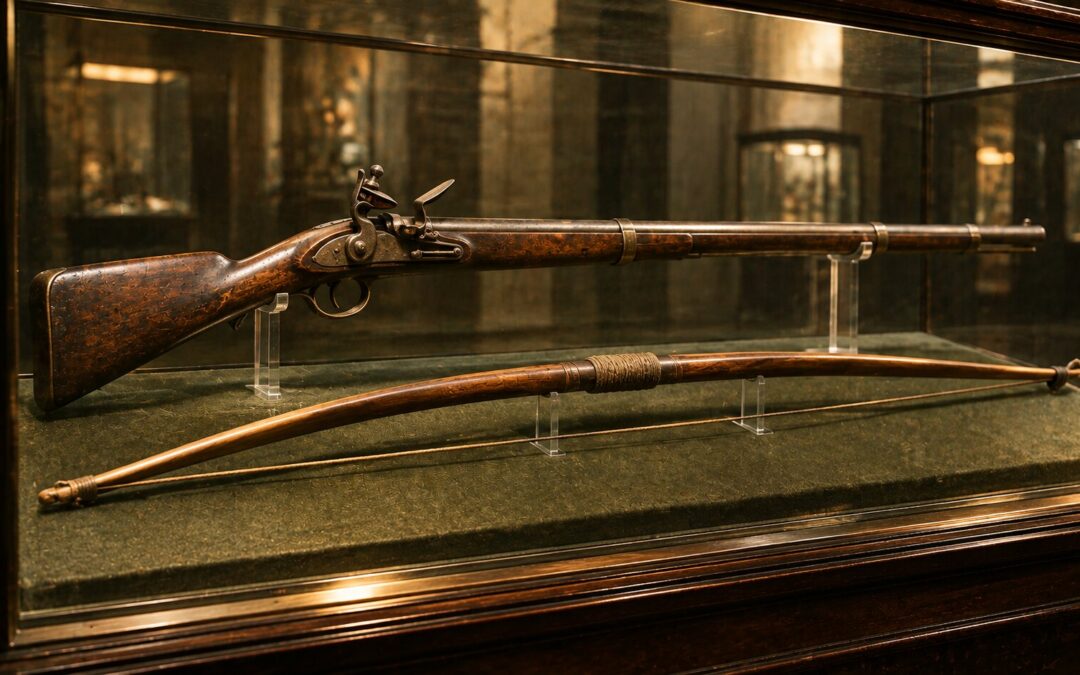
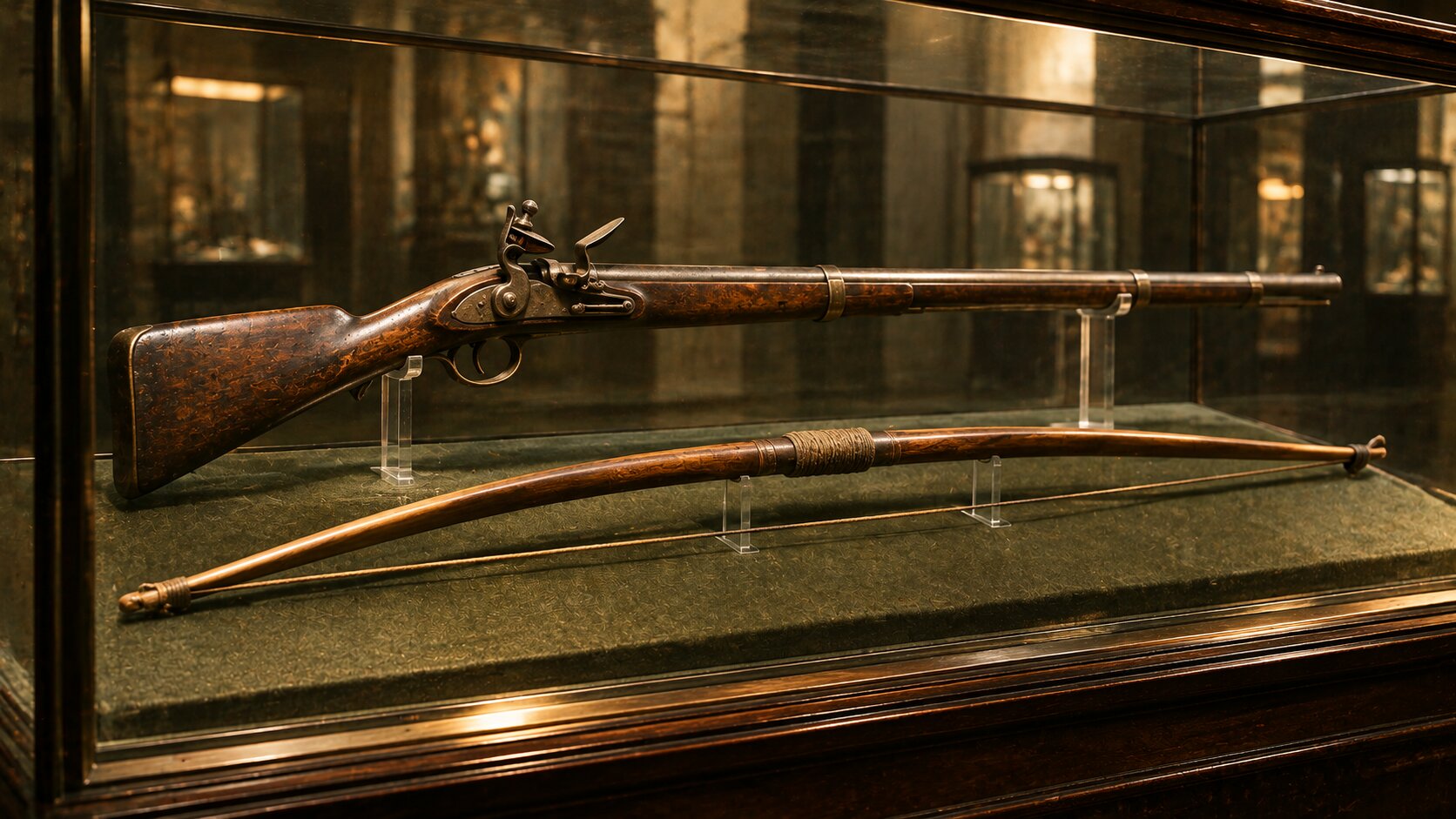
Every era of war fiction has its signature weapon: the Macedonian pike, the Roman short sword, the English longbow, the Brown Bess musket, the Minié ball of the Civil War, the V1 over London, the Stinger in the mountains of Afghanistan, the Trident in the depths of the Atlantic. This section gathers the blog's articles on historical weapons and on the missiles of the modern era, with what each one was according to museums and official sources, and how the novels of the catalog use it.
Why weapons matter to readers of military fiction
A historical novel stands or falls on its details, and weapons are among the details readers notice first. Bernard Cornwell is known for the care with which he describes the longbow, the musket and the Saxon blade; Simon Scarrow's legionaries live and die by the gladius; and the techno-thrillers of Tom Clancy, Harold Coyle and Rick Campbell turned missile systems into characters in their own right. Knowing what a weapon could and could not do helps a reader judge the scene in which it appears.
The articles below are historical and descriptive. They explain what each weapon was, when and by whom it was used and what part it played in the events of its time, from the sources of museums, archaeologists and official agencies. They give no technical instructions, no operational detail and no information on how to make or use anything.
From the sword to the missile
The history of weapons in fiction follows the history of war itself. For most of recorded history the decisive weapons were held in the hand or drawn by the arm, and a soldier's skill with them was a matter of years of training: Cornwell's archers practice from boyhood, and Scarrow's recruits drill with the gladius until it becomes part of them. Gunpowder changed the soldier's trade by making training faster and battle louder, and the rifled musket of the 1850s and 1860s, in the view of many historians, made the close-order tactics of the Napoleonic era far more costly.
The twentieth century moved the decisive weapons away from the soldier altogether. The V1 and V2 of 1944 were the first long-range missiles used in war, and within twenty years both superpowers had nuclear missiles in silos and in submarines. The thriller followed that shift: the Cold War novel is full of launch codes, silos and missile submarines, and the novels of the last decades add drones, electromagnetic pulse and chemical agents to the list.
The articles on historical weapons and missiles
The articles are grouped by era and type. Each line says what the article explains.
Ancient and Medieval Blades and Bows
- Sarissa: the long pike of the Macedonian phalanx, from ancient sources, and Steven Pressfield's The Virtues of War.
- Roman Gladius: the short sword of the Roman legions, from archaeological finds, and Simon Scarrow's Eagles of the Empire.
- Seax: the Saxon fighting knife, from archaeologists, and the seax that Bernard Cornwell gives his hero Uhtred.
- Ulfberht Sword: the inscribed Viking-age swords studied by archaeologists, and the swords of Cornwell's Saxon Stories.
- English Longbow: the weapon of Crécy and Agincourt, from historians, and Bernard Cornwell's novels of the archers.
The Age of Powder
- Brown Bess Musket: the British Army's flintlock musket from the early eighteenth century to the Napoleonic Wars, from museum sources, and the Sharpe novels.
- Minié Ball: the conical bullet that made the rifled musket the infantry weapon of the Civil War, and the Civil War novels of the catalog.
Rockets and Missiles
- V1 Rocket: the German flying bomb launched against London from June 1944, from Imperial War Museums sources, and Robert Harris's V2.
- Intercontinental Ballistic Missile: the ICBM from the Cold War to today, from official sources, and the nuclear thrillers that use it.
- Minuteman Missile: America's silo-based intercontinental missile, in service since the early 1960s, and the Cold War nuclear thrillers.
- Trident Missile: the submarine-launched ballistic missile of the American and British navies, from official sources, and Rick Campbell's submarine thrillers.
- Scud Missile: the Soviet-designed missile fired by Iraq in the Gulf War of 1991, from official histories, and Frederick Forsyth's The Fist of God.
- Patriot Missile: the air defense system, what happened in 1991 according to official reviews, and The Fist of God.
- Stinger Missile: the shoulder-fired missile of the Afghan war of the 1980s, from official sources, and Tom Clancy's The Cardinal of the Kremlin.
- Tomahawk Missile: the Navy's cruise missile, from public sources, and the techno-thrillers in which it is launched.
New Weapons and Modern Threats
- Drone Warfare: the development of armed drones from the Predator onward, from official sources, and the techno-thrillers that imagined it.
- EMP Attack: what an electromagnetic pulse is, from official sources, and William R. Forstchen's One Second After.
- Novichok: the nerve agent of the Salisbury case of 2018, from official sources, and Daniel Silva's The Cellist.
The novels of the catalog in which these weapons appear
These are the books and series the articles above refer to most often. Each link leads to the catalog page with the reading order and publication details.
Bernard Cornwell
The longbow in The Archer's Tale and Agincourt, the seax and the sword in the Saxon Stories, the musket and the rifle in the Sharpe series.
Eagles of the Empire, Simon Scarrow
The legions of Claudius and the gladius at close quarters, from Under the Eagle onward.
The Killer Angels, Michael Shaara
Gettysburg in July 1863, the battle in which the rifled musket and the Minié ball met the tactics of an earlier age.
V2, Robert Harris
The German rocket campaign of the last winter of the war, seen from a launch site and from the Allied team trying to locate the launchers.
The Cardinal of the Kremlin, Tom Clancy
A Cold War spy novel with the Afghan resistance and its weapons in the background; the Tom Clancy page lists the Jack Ryan novels in order.
The Trident Deception series, Rick Campbell
Submarine thrillers by a former Navy submarine officer, beginning with The Trident Deception.
One Second After, William R. Forstchen
A small American town after an electromagnetic pulse attack, the novel most often cited in debates on the subject.
The Cellist, Daniel Silva
A Gabriel Allon novel that opens with a poisoning modeled on the Novichok cases.
The War Novels and Techno-Thrillers genre pages list the rest of the catalog's fiction from these eras. Tanks, warships and submarines have their own indexes, beginning with military tanks.
Where the facts come from
The articles rely on museum collections, archaeological studies and the publications of official agencies. Useful sources are the Royal Armouries, the national museum of arms and armor of the United Kingdom, the Imperial War Museums' history of the German V-weapons and the Missile Defense Agency for the modern defensive systems. Performance figures are given only as officially published, and disputed claims, such as the effectiveness of the Patriot in 1991, are reported with their sources.
Part of Behind the Novels
This index belongs to Behind the Thriller Novels, the blog's guide to the real weapons, units and tradecraft behind military and spy fiction, where the sections on tanks, ships and aircraft are also listed.
Frequently asked questions
What were the most important weapons in history?
Historians often single out the spear, the sword and the bow, gunpowder and the musket, the rifled barrel, the machine gun, the airplane, and the nuclear weapon carried by long-range missiles. Each changed not only how battles were fought but how armies were raised and organized.
What are the main types of missiles?
The main families are ballistic missiles, which follow a high arc after a rocket-powered boost and include short-range missiles such as the Scud and intercontinental missiles such as the Minuteman and the Trident; cruise missiles, such as the Tomahawk, which fly like aircraft; and air defense and shoulder-fired missiles, such as the Patriot and the Stinger.
Which historical novels describe weapons in detail?
Bernard Cornwell's novels are known for their attention to the longbow, the musket and the early medieval sword, Simon Scarrow's for the Roman legion's equipment, and the techno-thrillers of Tom Clancy and Rick Campbell for modern missile systems.