DossierBehind the Novels
Age of Sail: Life Aboard the Ships of Hornblower, Aubrey and Bolitho
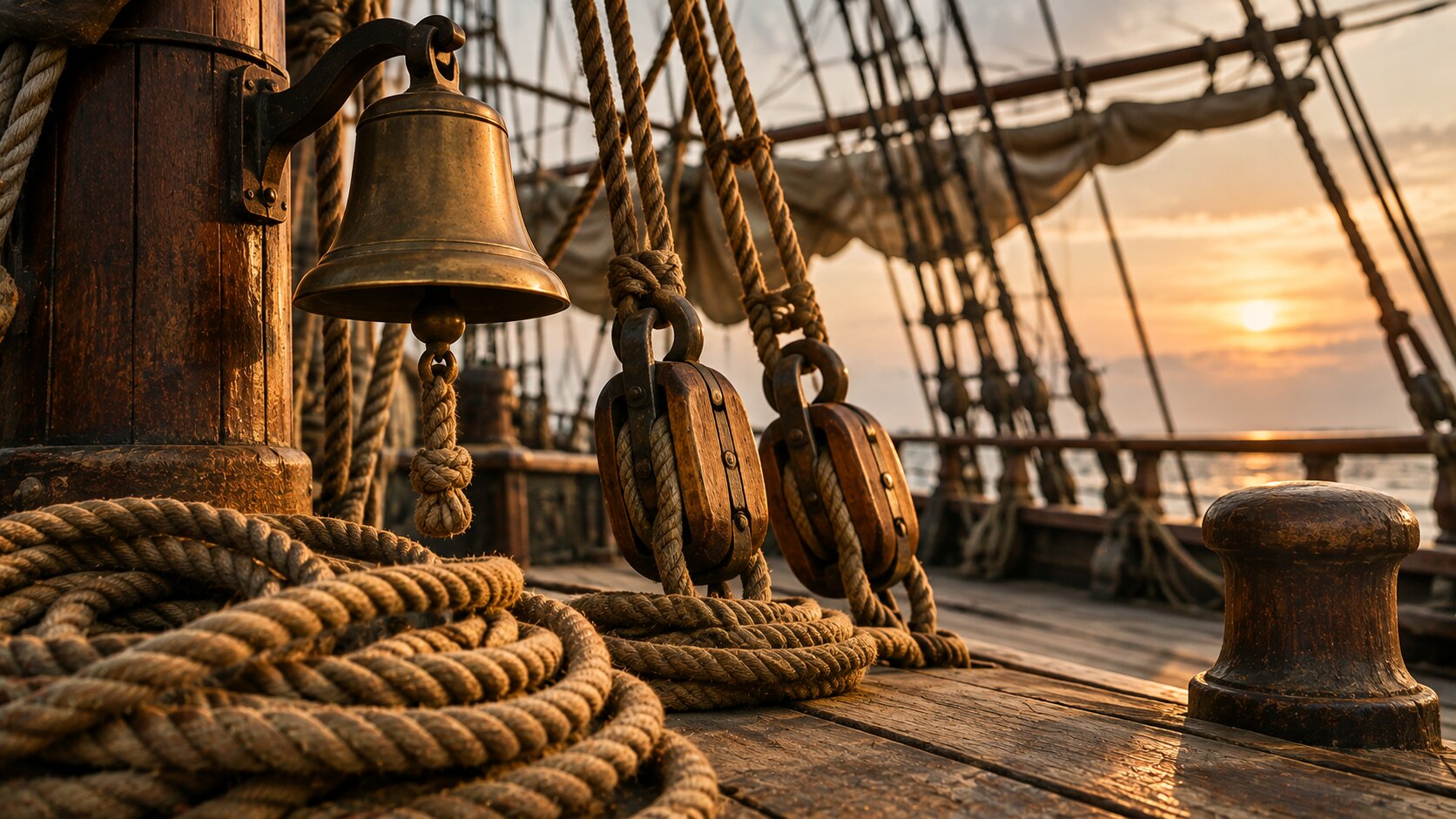
From the middle of the seventeenth century to the middle of the nineteenth, sea power meant wooden ships, canvas and the men who worked them. The navies of the Age of Sail fought the wars that built empires, and they gave fiction some of its most enduring heroes: Horatio Hornblower, Jack Aubrey and Stephen Maturin, Richard Bolitho. This section gathers the blog's articles on the ships, ranks, customs and hardships of the sailing navy, and on the pirates and privateers who sailed beside it, with what naval historians document and how the novels of the catalog use it.
Why the Age of Sail matters to readers of naval fiction
Naval fiction of the sailing era is one of the most loyal corners of the historical novel. C.S. Forester created the modern form with Hornblower in the 1930s, Patrick O'Brian took it to a new depth with the twenty completed Aubrey-Maturin novels, and Alexander Kent followed the Bolitho family through decades of the Royal Navy's wars. These authors expect their readers to learn the language of the ship as they go, from the boatswain's call to the difference between a frigate and a sloop.
They also describe a world of hard customs: the press gang, the rum ration, the ship's biscuit, the fear of scurvy and the authority of a captain far from any court. The articles below explain each of these from naval historians and museums, and they separate the practices that were common from those, like keelhauling, that belong mostly to legend.
Life aboard a ship of war
A ship of the line or a frigate of the Napoleonic Wars was a crowded, hierarchical world. At the top stood the captain, with his lieutenants and the young gentlemen learning the trade as midshipmen; beside them the warrant officers, such as the master, the boatswain, the gunner and the carpenter, who held their places for their skill; and below them the seamen, the landsmen and the boys, many of whom had not chosen to be there. Discipline, food, drink and disease shaped daily life as much as the enemy did, which is why the novels give so much space to them.
The articles on the Age of Sail
The articles are grouped by subject: the ships, life and rank aboard, and the pirates and privateers. Each line says what the article explains.
The Ships
- Frigate Ship: the fast warship of the Age of Sail, used for scouting, convoy work and independent cruises, and the frigates of Patrick O'Brian's novels.
- Sloop of War: the small warship commanded by a commander rather than a post captain, and Alexander Kent's Sloop of War.
Ranks, Crew and Life Aboard
- Royal Navy Ranks: how Royal Navy ranks worked in the Age of Sail, from midshipman to admiral, and how the sea novels use them.
- What Is a Midshipman?: the young officers in training of the sailing navy, and the novels that begin with one.
- Boatswain: the warrant officer who answered for rigging, sails and anchors, and the bosun in today's navies.
- Powder Monkey: the boys who carried gunpowder to the guns in action, from naval museums, and the Age of Sail novels.
- Press Gang: how the Royal Navy forced men to sea in wartime, from naval historians, and the novels in which the press appears.
- Grog Drink: the Royal Navy's rum ration, from Admiral Vernon's order of 1740 to its end on Black Tot Day in 1970.
- Hardtack: the ship's biscuit of the sailing navy, which was also a ration of the Civil War armies.
- Scurvy at Sea: the sailors' disease, the trials of the eighteenth century and the lemon juice the Royal Navy adopted in the 1790s.
- Keelhauling: the punishment between history and legend, how rare it was and what the Age of Sail novels show instead.
- Nautical Terms: the glossary of the sailing navy behind Hornblower and Aubrey, from the quarterdeck to the orlop.
Pirates, Privateers and Corsairs
- Privateer: what a privateer and a letter of marque were, and Patrick O'Brian's The Letter of Marque.
- Henry Morgan: the Welsh buccaneer who sacked Panama in 1671 and later served in the government of Jamaica, and Michael Crichton's Pirate Latitudes.
- Port Royal Jamaica: the buccaneer port destroyed in large part by the earthquake of 1692, from archaeologists, and Pirate Latitudes.
- Barbary Pirates: the corsairs of North Africa, the Barbary Wars of the young American navy, and Steve Berry's The Jefferson Key.
The novels of the catalog set under sail
These are the series and books the articles above refer to most often. Each link leads to the catalog page with the reading order.
Horatio Hornblower, C.S. Forester
The career of a Royal Navy officer from midshipman to admiral during the wars with France, from Mr. Midshipman Hornblower to the first Hornblower novel Forester wrote, Beat to Quarters.
Aubrey-Maturin, Patrick O'Brian
A captain and his friend, a ship's surgeon and intelligence agent, from Master and Commander through H.M.S. Surprise and The Letter of Marque.
Richard Bolitho, Alexander Kent
A long series that follows Bolitho from Midshipman Bolitho through the American Revolution and the Napoleonic Wars, including Sloop of War.
Pirate Latitudes, Michael Crichton
A privateering raid launched from Port Royal in the 1660s, published after the author's death.
The Jefferson Key, Steve Berry
A Cotton Malone thriller built on the letters of marque issued in the early years of the republic.
The Naval Thrillers genre page gathers the rest of the catalog's fiction at sea, from the sailing navy to modern submarines. The language of the ship that passed into everyday English is covered in nautical sayings, and the great ships themselves in navy ships.
Where the facts come from
The articles rely on naval historians, ships' records and the maritime museums that preserve the material culture of the sailing navy. Good places to continue are the Royal Museums Greenwich guide to life at sea in the Age of Sail, the Naval History and Heritage Command's pages on the Barbary Wars and the State Department Office of the Historian's account of the same wars. Where the novels and the record differ, the articles say how.
Part of Behind the Novels
This index is one of the sections of Behind the Thriller Novels, the blog's guide to the real history behind military and naval fiction, where the sections on warships, submarines and naval battles are also listed.
Frequently asked questions
When was the Age of Sail?
Historians usually date it from the middle of the sixteenth or seventeenth century, when sailing warships armed with broadside guns became the main instrument of sea power, to the middle of the nineteenth century, when steam and iron replaced wind and wood. Its most famous naval battles, such as Trafalgar in 1805, came near the end.
What were the ranks in the Royal Navy during the Age of Sail?
The commissioned officers rose from lieutenant through commander and post captain to the grades of admiral. Midshipmen were officers in training, and warrant officers such as the master, the boatswain, the gunner and the purser held their posts by warrant for their skills. The Royal Navy ranks article explains each step.
What are the best Age of Sail novels?
The series most often recommended are C.S. Forester's Hornblower novels, Patrick O'Brian's Aubrey-Maturin series, beginning with Master and Commander, and Alexander Kent's Richard Bolitho novels. All three are in the catalog with their reading orders.