DossierGenre
WWII Spy Novels
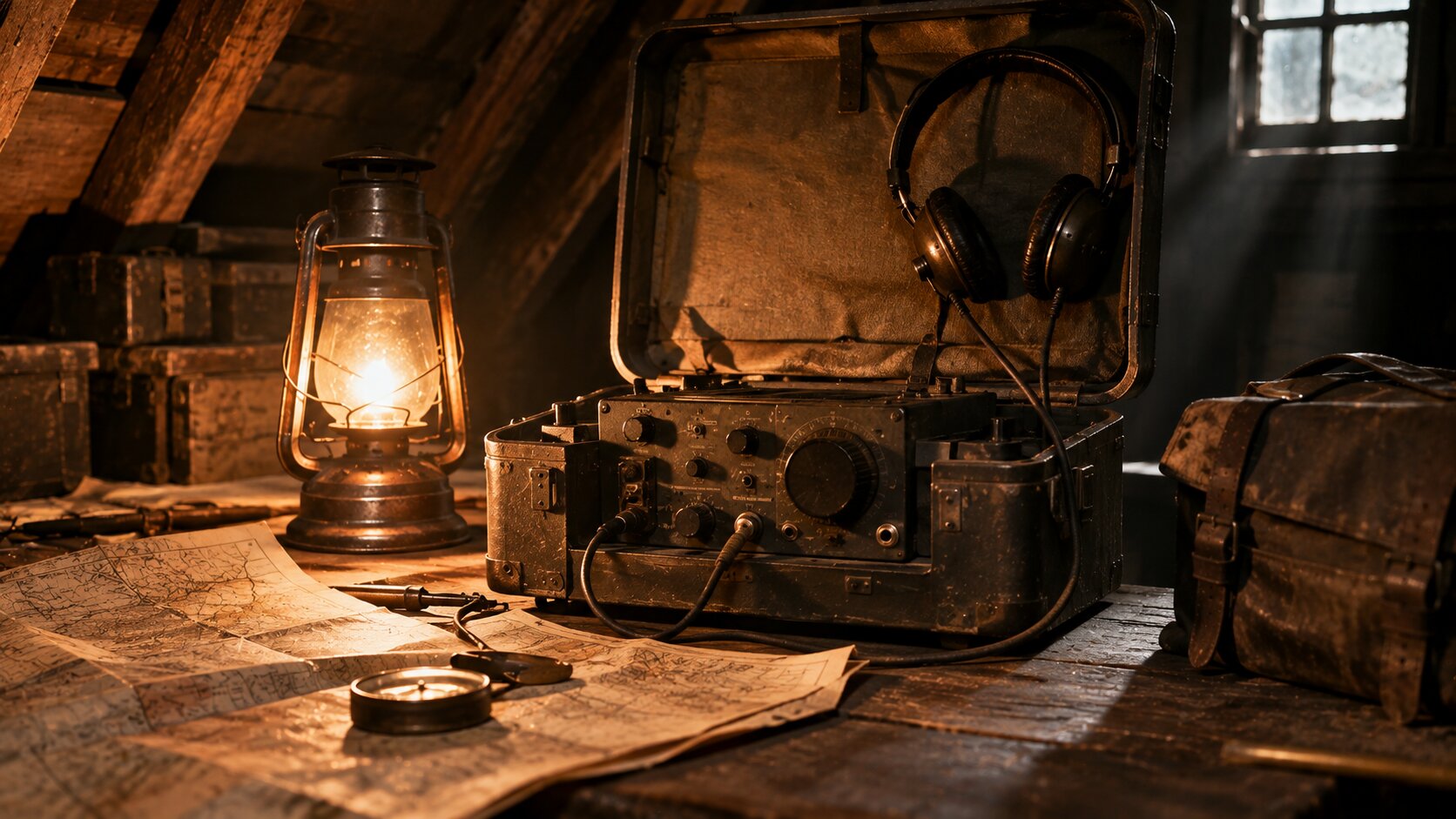
WWII spy novels are set in the years when espionage served a declared war: agents parachuted behind the lines, radio operators hiding in attics, double-cross operations, codebreakers and occupied Europe. This page covers the espionage fiction of the Second World War as the archive catalogs it, with the traits that define it, every author and series filed here, the number of books in each series and three reading paths through the best WWII spy novels.
What Are WWII Spy Novels?
A WWII spy novel is espionage fiction set during the Second World War or in the years immediately around it, from the late 1930s to the first postwar months. Its characters are agents of the British, American, German and Soviet services, resistance networks, codebreakers, journalists and ordinary people pulled into intelligence work by circumstance. The plots revolve around concrete military stakes: the date and place of an invasion, a cipher, a weapons program, a deception that must hold for a few more days. The world is shaped by occupation, curfews, forged papers, rationing and the constant risk of arrest, and the reader always knows that a real war is being fought somewhere just beyond the page.
The comparison with the Cold War spy novel marks the difference. In Cold War fiction the enemy is ideological and the war is never declared: the two sides compete for decades without open battle, and espionage is the war itself. In World War 2 spy novels the war is declared and armies are fighting it. Intelligence serves the front: a stolen plan can change a landing, a turned agent can mislead a general, a lost radio can doom a resistance cell. The moral lines are generally clearer, although occupation creates its own gray zones of collaboration, survival and betrayal.
What World War 2 Spy Novels Have in Common
The first recurring trait is the agent on enemy soil. Ken Follett's Eye of the Needle follows a German agent in Britain who discovers a secret that could change the course of the invasion of Europe, and Jack Higgins's The Eagle Has Landed imagines a German operation on English soil. Follett returns to the theme in The Key to Rebecca, set in wartime Cairo, and in Jackdaws, about a team of women agents sent into occupied France.
The second trait is the resistance network and the agents sent to support it. Pam Jenoff's The Lost Girls of Paris draws on the history of the women agents of Britain's Special Operations Executive, and Elizabeth Wein's Code Name Verity follows two young women, a pilot and an agent, caught in occupied France. Susan Elia MacNeal's Maggie Hope series, which opens with Mr. Churchill's Secretary, moves from Downing Street into intelligence work.
The third trait is Europe seen through a single, unheroic eye. Alan Furst's Night Soldiers opens a cycle of novels set across the continent before and during the war, David Downing's John Russell, a journalist living in Berlin, begins his series in Zoo Station, and Philip Kerr's Bernie Gunther, a Berlin detective, enters the scene in March Violets. The fourth trait is the alternate or contested history: Robert Harris's Fatherland imagines a world in which Germany won the war, while his Enigma is set among the codebreakers of Bletchley Park. Joseph Kanon extends the genre into the immediate aftermath with The Good German, set in occupied Berlin in 1945.
How to Recognize a Well-Documented WWII Spy Novel
A documented WWII spy novel uses the real institutions of the period correctly: the Special Operations Executive and the Office of Strategic Services, the German Abwehr and security services, the British system for turning captured agents, and the codebreaking effort. Ranks, procedures and chains of command match the record, and invented operations fit into the real calendar of the war without contradicting it.
Daily life is specific. Identity documents, ration cards, travel permits, blackout rules, radio schedules and the risk of direction-finding vans shape what agents can do. The best books show how much of an agent's life was waiting, and how a small mistake, a wrong accent, a forgotten habit, a careless message, could be fatal.
The research shows in the details. Several authors in this genre come from journalism and history: Alex Gerlis worked as a journalist at the BBC, Robert Harris was a political journalist before turning to fiction, and authors such as Alan Furst and David Downing are known for their reconstruction of prewar and wartime Europe. When a novel departs from history, as an alternate history does by design, the strongest examples make the departure clear and keep everything else accurate.
The novels of Marc Dufort, the author who curates this archive
WWII Spy Novel Authors in the Archive
These are the authors filed under WWII spy novels. Each author page lists the complete books, the series and the reading order.
- Alan Furst: the Night Soldiers cycle of espionage novels set in Europe before and during the war.
- Alex Gerlis: the Spies, Richard Prince, Wolf Pack Spies and Double Agent series.
- David Downing: the John Russell series set in Berlin and the Jack McColl series set in the First World War era.
- Elizabeth Wein: the Code Name Verity novels, published for young adult readers.
- Jack Higgins: the Liam Devlin and Dougal Munro and Jack Carter wartime novels and the later Sean Dillon series.
- Jacqueline Winspear: the Maisie Dobbs series, which moves from the aftermath of the First World War into the Second, plus standalones.
- Joseph Kanon: standalone espionage novels set from the late 1930s into the early Cold War.
- Ken Follett: spy thrillers from several eras, with Eye of the Needle, Jackdaws and Hornet Flight set during the Second World War.
- Pam Jenoff: novels of occupied Europe and the women agents of the war.
- Philip Kerr: the Bernie Gunther series and the standalone Hitler's Peace.
- Robert Harris: historical and alternate-history thrillers, including Fatherland and Enigma.
- Susan Elia MacNeal: the Maggie Hope series and a standalone novel.
WWII Spy Series and Reading Orders
Many WWII spy series follow their characters through the war year by year, so reading order matters. The list below gives every series filed under this genre, with the number of books currently cataloged; the Jack McColl series does not have individual book pages yet, and its full book list is on the series page. The general index of series in reading order covers the whole archive.
- Night Soldiers Books in Order15 booksAlan Furst
- Alex Gerlis Double Agent Books in Order3 booksAlex Gerlis
- Alex Gerlis Spies Books in Order4 booksAlex Gerlis
- Richard Prince Books in Order4 booksAlex Gerlis
- Wolf Pack Spies Books in Order3 booksAlex Gerlis
- Jack McColl Books in OrderDavid Downing · full book list on the series page
- John Russell Books in Order8 booksDavid Downing
- Code Name Verity Books in Order4 booksElizabeth Wein
- Dougal Munro and Jack Carter Books in Order3 booksJack Higgins
- Liam Devlin Books in Order4 booksJack Higgins
- Sean Dillon Books in Order22 booksJack Higgins
- Maisie Dobbs Books in Order18 booksJacqueline Winspear
- Kommandant's Girl Books in Order3 booksPam Jenoff
- Bernie Gunther Books in Order14 booksPhilip Kerr
- Maggie Hope Books in Order11 booksSusan Elia MacNeal
Two series in the list need a note. The Sean Dillon books, although written by the author of The Eagle Has Landed, are set mostly in the decades after the war. The Jack McColl series takes place in the years of the First World War and the Russian Revolution, outside the Second World War, and is filed here because it shares author and method with the John Russell books.
The Best WWII Spy Novels to Start With: Three Reading Paths
New to the genre
Start with Eye of the Needle, winner of the Edgar Award for Best Novel, or The Eagle Has Landed, adapted into a 1976 film. Both are self-contained and move quickly.
Ready for a series
Follow one character through the war: Zoo Station begins John Russell's Berlin years, Mr. Churchill's Secretary begins Maggie Hope, and Night Soldiers opens Alan Furst's cycle, whose books can also be read independently.
Experienced readers
Try the books that bend the form: Code Name Verity, winner of the Edgar Award for Best Young Adult novel and a Printz Honor book, Fatherland for alternate history, and The Good German for the first months after the war.
Discover the novels of Marc Dufort, curator of this archive
WWII Spy Novels: Frequently Asked Questions
What is the difference between WWII spy novels and Cold War spy novels?
WWII spy novels are set in a declared war, and intelligence serves military operations. Cold War spy novels are set in an undeclared standoff, where espionage is the main form of conflict.
Are these books fiction or history?
Fiction. Many draw on real organizations and operations, but every book on this page is a novel. Nonfiction about wartime intelligence is outside this catalog.
Where are the Second World War novels without espionage?
Fiction about combat, occupation and the home front is on the war novels page, and the war at sea on the page for naval and submarine thrillers. Every genre is listed in the genre index, and every author in the author index.